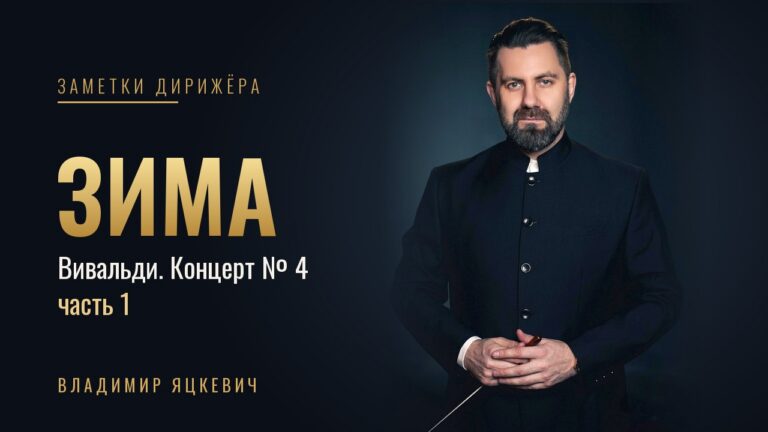
 Vladimir
International Music Day: How Shostakovich and the Gnessin Academy Remade the DNA of the Classics
When we speak of classical music education, images of strict professors and academic silence often come to mind. But the Gnessin Academy and the contemporary stage prove that real music is living energy, able to rock a hall harder than any rock festival.
On October 1, International Music Day, this sound conveyor opens up to the maximum, linking great history and daring modernity into one powerful blockbuster.
Imagine: Moscow, the present day. Within the walls of the legendary Gnessin Academy, new interpretations of the most complex scores are born. Vladimir Yatskevich, a graduate of this powerful school, steps up to the conductor’s podium and leads the orchestra as a single living organism. The orchestra erupts in a powerful, dense sound, performing iconic works by Dmitri Shostakovich. This is not just a concert for a date in the calendar; it is a demonstration of how an academic school turns into the main visual and sonic special effect of a generation.
The anatomy of an absolute triumph of sound
1. Shostakovich’s initiative in practice
Dmitri Shostakovich stood at the origins of International Music Day, which was first celebrated on October 1, 1975. His own Second and Seventh Symphonies once shocked contemporaries with their innovation. Today this legacy is not archive scores but a required challenge for every ambitious orchestra.
2. The Gnessin Academy as a silicon valley of talent
The Gnessin Russian Academy of Music has for decades kept its standing as a leading music brand. It is not just a school but an ecosystem that teaches musicians to feel their neighbor’s shoulder in the chorus and the perfect harmony in the orchestra. Its walls produce leaders ready to break stereotypes about “boring classics.”
3. Vladimir Yatskevich’s conductor’s upgrade
Modern performance demands a new rhythm. Yatskevich carries the traditions of the Gnessin school to big stages, combining jeweler’s precision in leading the orchestra with furious energy. Under his direction Shostakovich’s classic works sound spacious and contrasting and strike to the depths of the soul, making audiences freeze, as the Italians once did at La Scala.
4. A total synergy effect
When the trigger of a holiday, the scale of Shostakovich, the authority of the Gnessin Academy and the charisma of a modern conductor meet at a single point, music ceases to be merely art. It becomes a universal code that unites continents, erases the borders between generations and returns us to pure emotion.
What this day proves
This day proves that traditions are alive as long as there are people ready to perform them at top speed and with uncompromising quality. Shostakovich laid the foundation, the Gnessin Academy preserved the school, and a new generation of conductors continues to bring this music to people’s hearts.